
A Conversation with Lorraine
I am always experimenting and exploring new ideas. In this interview, I share my creative process, thoughts on Switzerland and some joyful moments from my journey.
– Lorraine
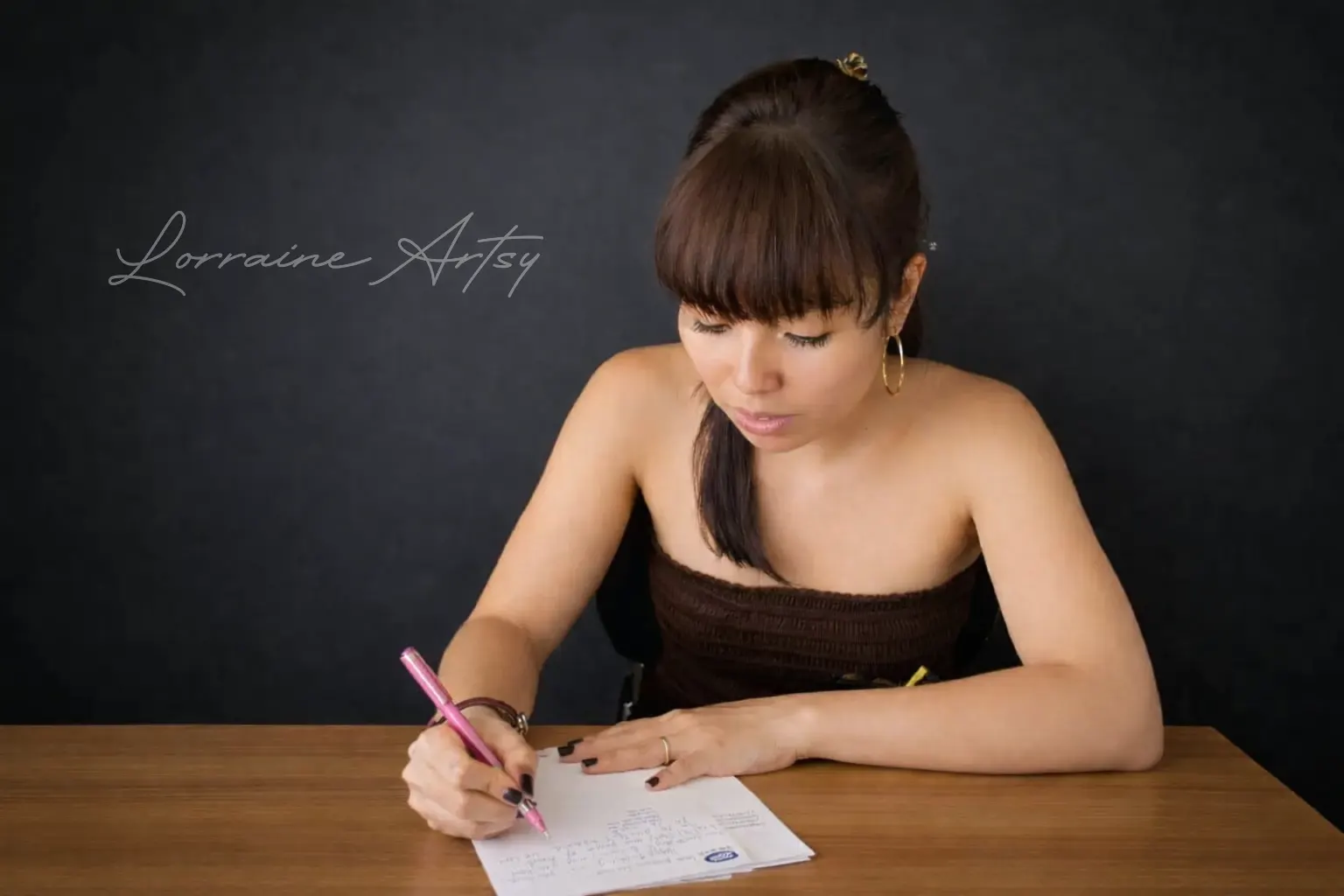
How did you start painting and what made you want to try it?
Lorraine
I began painting while living in Croatia, at a time when I was looking for something creative and fulfilling. I started with paint by numbers, which gave me a simple way to explore colour and form. Before long, I wanted to create something entirely my own.
My first original acrylic painting was an anniversary gift for my parents in law. I painted it without a guide, following my intuition and putting a great deal of heart into it. The process was challenging, but when I stepped back and saw the completed piece, I felt something I wanted to experience again.
Looking back, creativity had always been part of me. As a child, I loved drawing, colouring, dancing and anything expressive. Painting brought me back to that part of myself. What began as a personal creative practice gradually became an important part of my life and eventually grew into Lorraine Artsy.
What inspires you?
My inspiration comes from nature, travel, memory and quiet moments I experience around me.
I am especially drawn to mountains. Their scale, strength and mystery feel powerful and calming at the same time. The mountains of Switzerland have become a particularly strong source of inspiration for me. There is something about their presence, the silence around them and the way light changes across the landscape that stays with me long after I leave.
The moon is another important source of inspiration, particularly when it is full. I love its soft glow and the sense of stillness it brings to the night sky.
These impressions often remain with me and later emerge through colour and feeling. I rarely begin with a fixed story. When my mind is calm, ideas arrive naturally and I allow them to develop on the canvas in their own way.
Do your paintings have a meaning or are they more about feeling?
For me, feeling comes first, but meaning often reveals itself as a painting develops. I rarely begin with a fixed message or explanation. Instead, I respond to emotion, memory, colour and instinct.
A landscape may gradually become about calm and reconnection. A moonlit sky may carry a sense of memory, wonder or distance. I also leave room for viewers to bring their own experiences to the work and discover meanings I may not have consciously planned.
Creative partnerships sometimes begin with an agreed theme or story. That gives the painting a framework, but emotion and intuition remain part of every decision I make.
What materials do you use for your paintings?
I work primarily with acrylic paint on high quality cotton canvas. Acrylics allow me to build layers, adjust colours and respond intuitively as a painting develops. I use a variety of brushes depending on the texture, movement and atmosphere I want to create.
I am also curious about oil painting and may explore it in the future, but acrylic remains the medium at the heart of my current body of work.
Do you plan a painting in advance or paint intuitively
I usually begin with an image, colour palette, atmosphere or feeling rather than a detailed plan. I may have a landscape or particular mood in mind, but I allow the painting to change as I work.
Painting intuitively means responding to what the canvas needs. If a direction no longer feels right, I step back, adjust it or allow the work to rest until I can see it more clearly. That freedom often allows the finished painting to become something more interesting than my original idea.
How long does a typical painting take you?
The time depends on the size, level of detail and how the painting develops. A 100 × 70 cm piece often takes between 20 and 30 hours across several sessions. Smaller works can come together more quickly, while larger or more complex paintings may need additional time.
Some pieces flow naturally, while others require layers, revisions and pauses. I consider a painting finished when the colour, composition and feeling come together in a way that feels complete.
What do you enjoy most about the painting process?
What I enjoy most is the moment when a painting finds its balance. During the process there can be uncertainty, but then the colours, light and composition suddenly begin to connect.
Stepping back and seeing the completed piece brings me a deep sense of fulfilment. It is the moment when something that previously existed only in my imagination becomes real.
What part of painting do you still find challenging?
The middle stage is often the most demanding. I may begin with a clear feeling or vision, but not everything develops as I imagined. Colours may clash, a section may feel flat or the composition may need to change.
When that happens, I repaint areas, explore a different direction or allow the painting to rest. Returning with fresh eyes often reveals what needs to change. I have learned that the pause can be just as important as the brushstroke.
Do you listen to music or need silence when you paint?
Most of the time, I prefer silence. It allows the noise around me to disappear so that I can focus entirely on the painting. It becomes just me, the brush and the canvas.
Sometimes I listen to calm music with a gentle rhythm, as long as it does not distract me. It depends on how I feel, but silence is what I return to when I want the deepest connection with my work.
Are your paintings based on real places or imagination?
My paintings often begin in my imagination, but they are shaped by places I have experienced while travelling, particularly the mountains, lakes and landscapes of Switzerland and the wider European countryside.
I do not usually try to reproduce a place exactly. Instead, I remember the atmosphere, the light, the colours and the feeling of being there. Those impressions stay in my visual memory and later appear in unexpected ways on the canvas.
I also study artists whose work I admire. I am especially drawn to Van Gogh’s emotional use of colour and Henri Matisse’s boldness and simplicity. As a self taught artist, observing other artists helps me deepen my technique, but everything is filtered through my own experiences and instincts before reaching the canvas.
What do you hope people feel when they see your art?
I hope people feel calm, joy and a sense of reconnection when they see my art. We live surrounded by noise, pressure and constant information, and I want my paintings to offer a quiet space where people can slow down, breathe and return to themselves.
Nature has that effect on me, especially the mountains and landscapes of Switzerland. Their scale can make everyday worries feel smaller, while their stillness creates a sense of perspective and calm. I try to carry some of that feeling into my paintings.
I am naturally drawn to softness, light and nature rather than darkness or intensity. That does not mean ignoring life’s difficulties, but choosing to transform them into something peaceful. Sometimes a landscape, a moonlit sky or a familiar feeling in nature can bring us back to childhood memories, or to a part of ourselves that everyday stress has pushed aside.
If my paintings allow someone to pause, feel serenity and reconnect with their inner world, even for a moment, then they have expressed exactly what I hoped they would.
How has your style changed since you started
My style has become bolder, more intuitive and more confident. My earlier paintings were more careful, smaller and restrained in colour. Over time, I began using stronger palettes, larger canvases and more expressive compositions.
I now trust my instincts more. Calm remains at the heart of my work, but I have learned that calm does not always require soft colour. It can also exist alongside contrast, mystery and strength. Experimentation continues to shape my artistic language.
What advice would you give to someone who wants to start painting?
Start before you feel completely ready. You do not need a perfect plan or expensive materials to begin. Give yourself permission to experiment, make mistakes and discover what feels natural to you.
Focus on the experience before the outcome. Painting can create a rare moment of concentration and peace. Learn from artists you admire, remain curious and humble, but do not lose your own instincts by trying to follow someone else’s path.
Most importantly, enjoy the process. Confidence grows through creating.
Where can people experience your artwork?
Some of my paintings have found homes in private collections, while others can be experienced through exhibitions in cultural venues, galleries and creative spaces.
Visit my exhibitions page to discover current and upcoming opportunities to experience my work in person, or explore the gallery online.
My view on nature, authenticity, and finding meaning in calm
In September 2026, I spoke with GER (Global Entrepreneur Review) about my life as an artist, my connection with nature, authenticity and why calm and stillness play such an important role in my work.
You can read the full interview on the GER website.
A Filipina artist's journey of creativity beyond borders
In October 2026, I spoke with Issa about my journey as a Filipina contemporary artist, pursuing my passion for art while building a creative career abroad. You can read the full interview on Excapelabs.